Are We Really Feeling Peachy?

Photo by Ron Lach on Pexels.com

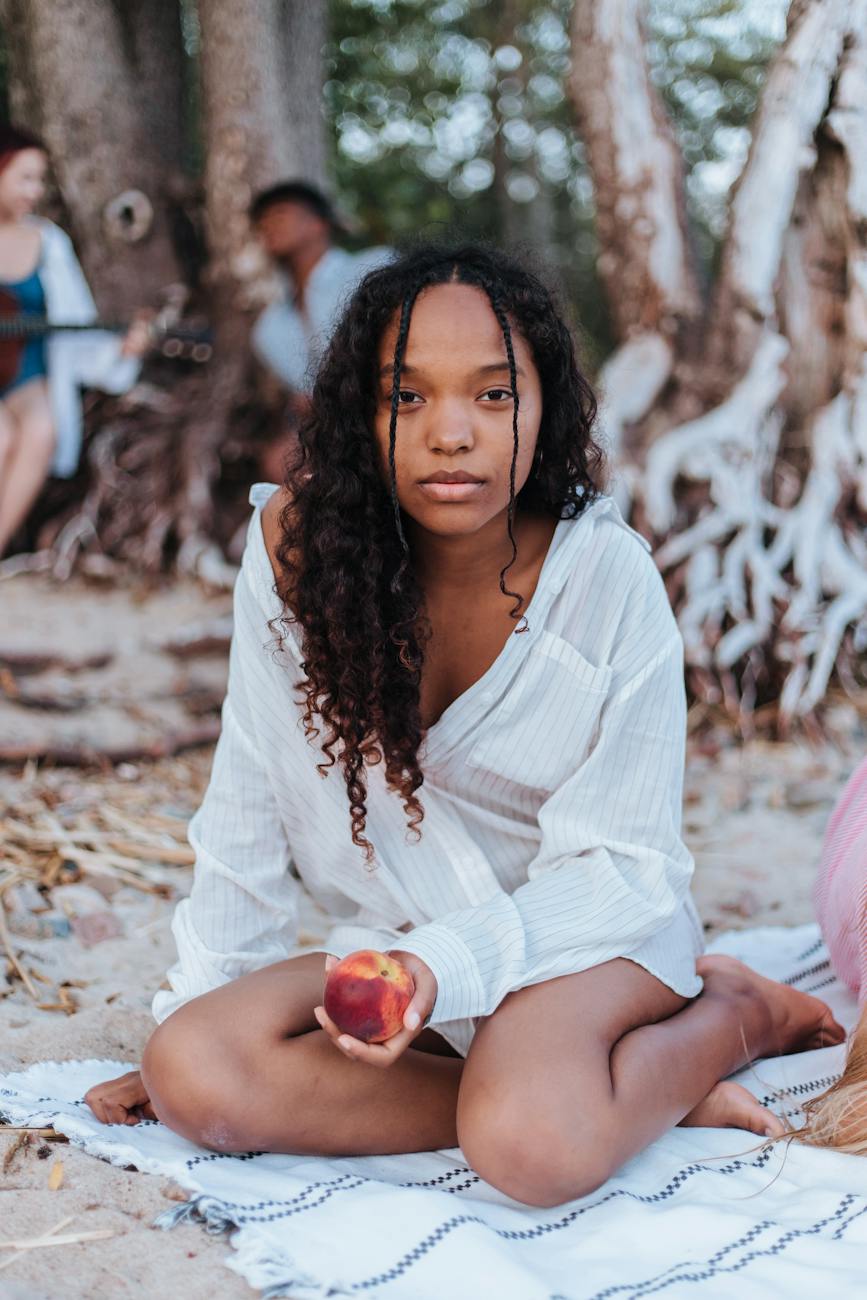
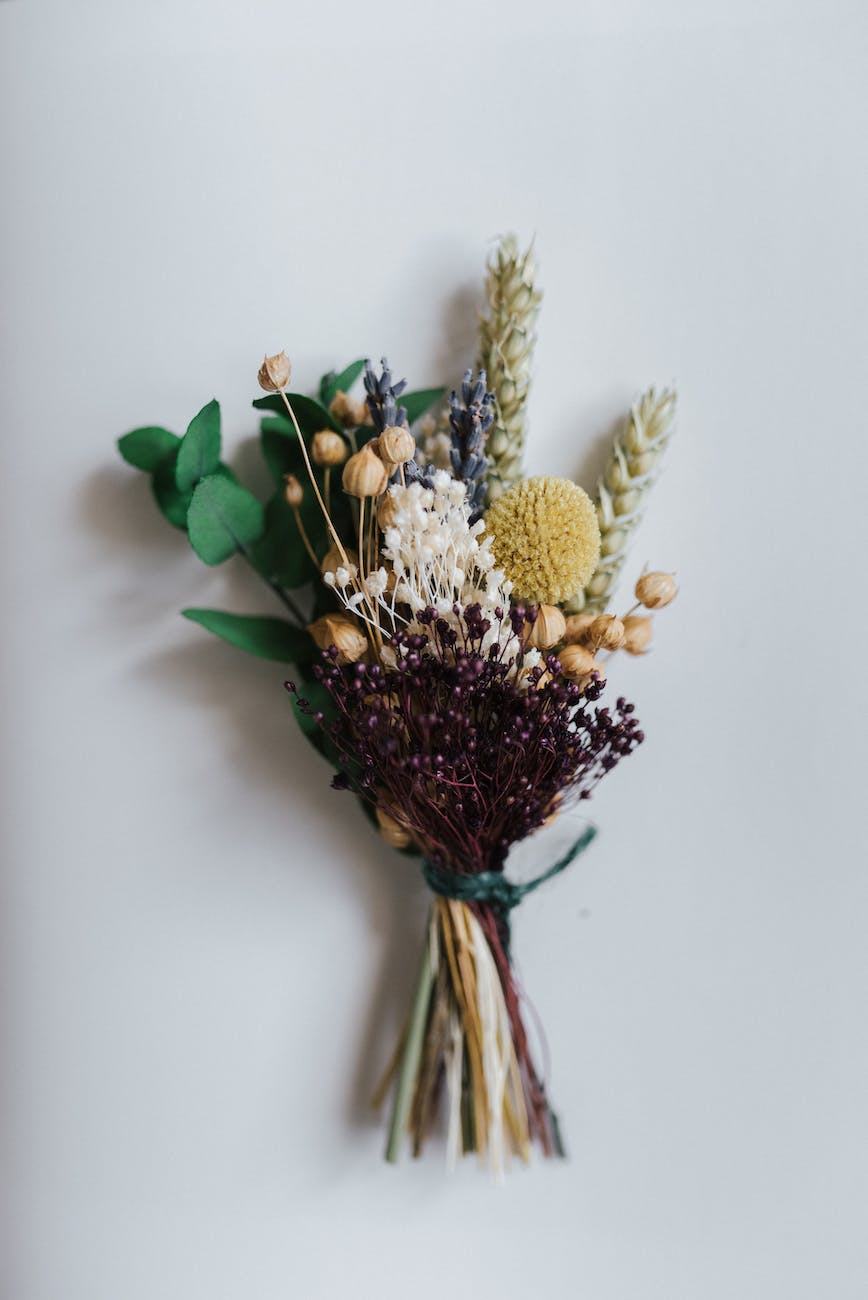
This year, Pantone has selected “Peach Fuzz” as it’s color of the year. According to their website, “[P]each Fuzz communicates a message of caring and sharing, community and collaboration.” If you are curious about Pantone and it’s significance, feel free to check out https://www.pantone.com/. For now, I don’t have anything else to say about Pantone except I think they appear woefully out of touch this year.

(And I pause to reflect. I suppose I write this post because I too could give that impression. I mean, my business is called “Cause to Celebrate” and my web domain celebrates life. It’s lovely and inspiring to me, yet could seem out of touch. I guess that’s why I write this blog, to provide some balance and context.)

So let me provide some context for what bothers me about Pantone’s choice. Pantone is an AMERICAN company. They select a color of the year every year, with the intent of essentially capturing the cultural zeitgeist with a single color. Then, of course we start seeing this color everywhere. They can pick ANY color in any given year. So wait a minute… we’re on the cusp of losing our democracy and Pantone thinks we’re all about caring and sharing this year? Now, I personally endorse the idea of caring and sharing. And yes, it’s exceptionally important for us to connect interpersonally in order to manage the stress of our turbulent times. But this year’s color shouldn’t be about caring and sharing because that is NOT the cultural zeitgeist. Maybe this year’s color should be the color of scorched earth or a massive tire fire or some sort of industrial accident – cause that is what’s coming FOR ALL OF US if we don’t figure some stuff out in this election cycle.

Maybe Pantone is hoping to offer a color that optimistically represents an antidote to our toxic times, which I genuinely believe is caring and sharing on a fundamental level. But THIS critical election year, that’s not going to cure us – not even close. We have to VOTE for a democracy to stay alive. We have to pay attention. We have to think beyond the moment and consider a possible future where we can’t reasonably dispute issues and compromise on solutions. That absence of conflict may sound nice in the short term but the consequence is going to be the loss of freedom to choose our own position. Again, may sound appealing if you think the prevailing attitude is going to match yours because you don’t have to defend your position anymore. I guarantee it won’t stay that way for long, if it ever really was going to be that way.

Without democracy we likely have to accept what authoritarians tell us as true and accept their ‘solutions’ if there are any - or risk harm to ourselves and our loved ones. That’s the cost we’ll all pay eventually when democracy dies, and anyone who thinks they’ll be exempt is woefully out of touch. Authoritarians are not relatable people. They don’t care about anyone else because that’s the quality that draws people to authoritarianism; not having to care or really share at all.

So yes, please start caring and sharing if you haven’t started yet, but it’s not at all peachy out here.

Why Don’t We Learn?

Photo by John Finkelstein on Pexels.com

If the essential core of the person is denied or suppressed, he gets sick sometimes in obvious ways, sometimes in subtle ways, sometimes immediately, sometimes later. – Abraham Maslow

While obtaining my master’s degree in education, I became quite familiar with and frequently referenced the work of Abraham Maslow. His work was essential in understanding human motivation and the needs we all must satisfy in our lives, so that we may obtain higher levels of self-awareness and personal fulfillment. As educators, we were expected to work toward crafting educational environments in which individual needs can be satisfied and promote higher learning. As an interior designer, I frequently think of this hierarchy of needs in assessing the quality of built environments as well. The model resonates across many disciplines because it can be meaningfully applied in a variety of contexts when discussing human potential for learning and growth.

According to Maslow, our most basic needs are physiological. Our perception of physical safety is one of them. When we do not feel safe, our motivation to learn is defeated by our preoccupation with the absence of safety. We cannot successfully master higher level tasks without safety. Maslow very importantly stresses that we also fail to learn when we retreat from the innate challenges of our existence in order to feel safe. We need to be safe enough to challenge ourselves and experience new things that offer opportunities for learning in order realize our full human potential.

I can’t help contrast what is happening in education today with this broadly accepted postulate concerning safety and learning. It seems there is a lot of confusion about what constitutes being safe enough to learn and what constitutes a retreat from learning in the name of safety.

For example, we witnessed another tragic slaughter taking place in a school. Our school-aged children have just received another injection of anxiety concerning their physical safety at school. We know that their learning is compromised and a whole generation of young people is at risk of failing to make progress because the presumption of safety is disappearing, if not absent, for youth in schools. Still, one side of the gun safety debate is unwilling to concede this fact concerning our kids if preventing another slaughter involves removing a default entitlement to own weapons specifically designed to mass-slaughter humans.

The proponents of gun culture insist such entitlements to weapons of war must be universally protected in the name of personal ‘safety.’ This is not personal ‘safety,’ it is the means by which they reserve the right to collectively retreat from learning about our historically and fundamentally flawed approach to our human differences – bolstered by hysterics concerning the infiltration of ‘woke culture.’ It’s no coincidence that the most bigoted members of Congress are the ones wearing AR-15 pins on their lapels.

At the same time, many of the same folks dismissing the need for safety at schools by obvious measures to prevent would-be mass shootings are focused on banning ideas, books and appearances by individuals who encourage kids to consider how we deal with human differences, both historically and currently. They do this in the name of ‘safety;’ safety from things that could make kids feel uncomfortable, or might make them feel responsible for their own bad behavior, or might motivate them to stop the bad behavior of others toward people who are different from them. This is not ‘safety,’ it is a coordinated retreat from learning about human differences – bolstered by hysterics concerning child safety that are completely and simultaneously withdrawn when talking about guns.

This dynamic has gotten so insane that a school recently banned kids from singing a song whose primary message is “We are rainbows, me and you, Every color, every hue, Let’s shine on through, Together, we can start living in a Rainbowland.” The apparent fear was communicating any kind of tacit acceptance toward LGBTQ+ people. The impact isn’t just felt by LGBTQ+ people though, because it’s only the latest example. For centuries kids have been learning that accepting differences is something they shouldn’t do. They learned that via the overwhelming presence of a homogenized, sanitized and white-washed dominant culture powered by people who systematically denied opportunities and agency to anyone who didn’t uphold their dominance.

Contemporaneous with more cultural acceptance of diversity, some adults who are products of our flawed system are now fostering environments where they and their kids can continue to isolate and bully any kid who is somehow separate from the dominant identities of the group – whatever they happen to be. Legislators are calling these efforts in schools ‘parental rights,’ intended to keep their kids ‘safe’ from the threat of things like personal responsibility, cultural awareness and cross-dressers. Systems are upholding stratification and segregation in the name of ‘protection.’ The outright hostility toward learning about, or experiencing discomfort as a result of our (still) flawed approach to human diversity only makes us less safe.

Those same folks perpetuating hostile environments and coordinating the resistance to learning about each other think they’re being sympathetic when they offer thoughts and prayers to families of mass-shooting victims. They wonder out loud (as if they don’t know) how it is someone can become so angry and self-loathing as to buy a bunch of guns and slaughter school children on the way to what they assume is their own suicide. That’s a question that can be asked and answered quite simply, and that should make everyone quite uncomfortable.

So come on. Stop it. You know better. Stop the guns. Stop the hate. Just stop it.

Trust Fall

Photo by Craig Gary on Pexels.com

Deciding to hire a designer is an act of trust. These days, it’s especially hard to establish trust with potential clients. Clients want as much information as possible prior to making a commitment, and that is completely understandable. When you are skeptical of the source and you’re investing significant resources, you want greater assurance of a successful outcome.

Everyone is looking for the sure thing. They are looking to hedge their bet. They think the way to do that is to go with a proven quantity, a remake of something you have already seen. That is their mindset.

Leonard Maltin

When making the calculations to decide whether to hire a designer, the unknown quantity is most obviously the design process. There is a process required to come up with a design that is truly personal, unique and lasting. That process involves the client and the designer working together. The experience of the process is not something that is quantifiable, most especially at the beginning.

Instead of looking at the design process, many clients just focus on the design itself. That’s why demand for information up front among prospective clients is skyrocketing, and that is why many designers simply can’t afford to stay in business. They spend too much time giving prospective clients a ton of information for free in order to convince the client to hire them. It’s not good for the prospective client or the designer, because the information doesn’t represent what’s truly possible. A proposal submitted up front can never truly represent what it would be like to work with that designer. And because a quality process engages both designer and client, the proposed work product is never going to be as satisfactory as the final product.

In sum, this dynamic repeated throughout the industry explains why you’re seeing a lot of ‘design consultants’ working in retail and the balance of interior designers focusing on commercial design. Residential interior design as an independent profession is disappearing, succumbing to the widespread belief that the free consultations at local retailers are an adequate substitute for a holistic design process and plan for the evolution of the home environment.

This makes me sad. But ironically, the experience of a pandemic may offer some additional future insight into the value of hiring an independent interior design professional. Spending so much time at home with your loved ones likely made a bad relationship with your space even worse. Or, perhaps you discovered some ways your good relationship with your space could be made even better. Right now, everyone just wants to get out of the house. But eventually, when we all come back into balance, we’ll look to fall in love with our homes again. Consider a trustworthy designer who has your best interests at heart.

Fee * Fi * Ho * Hum

Photo by Picas Joe on Pexels.com

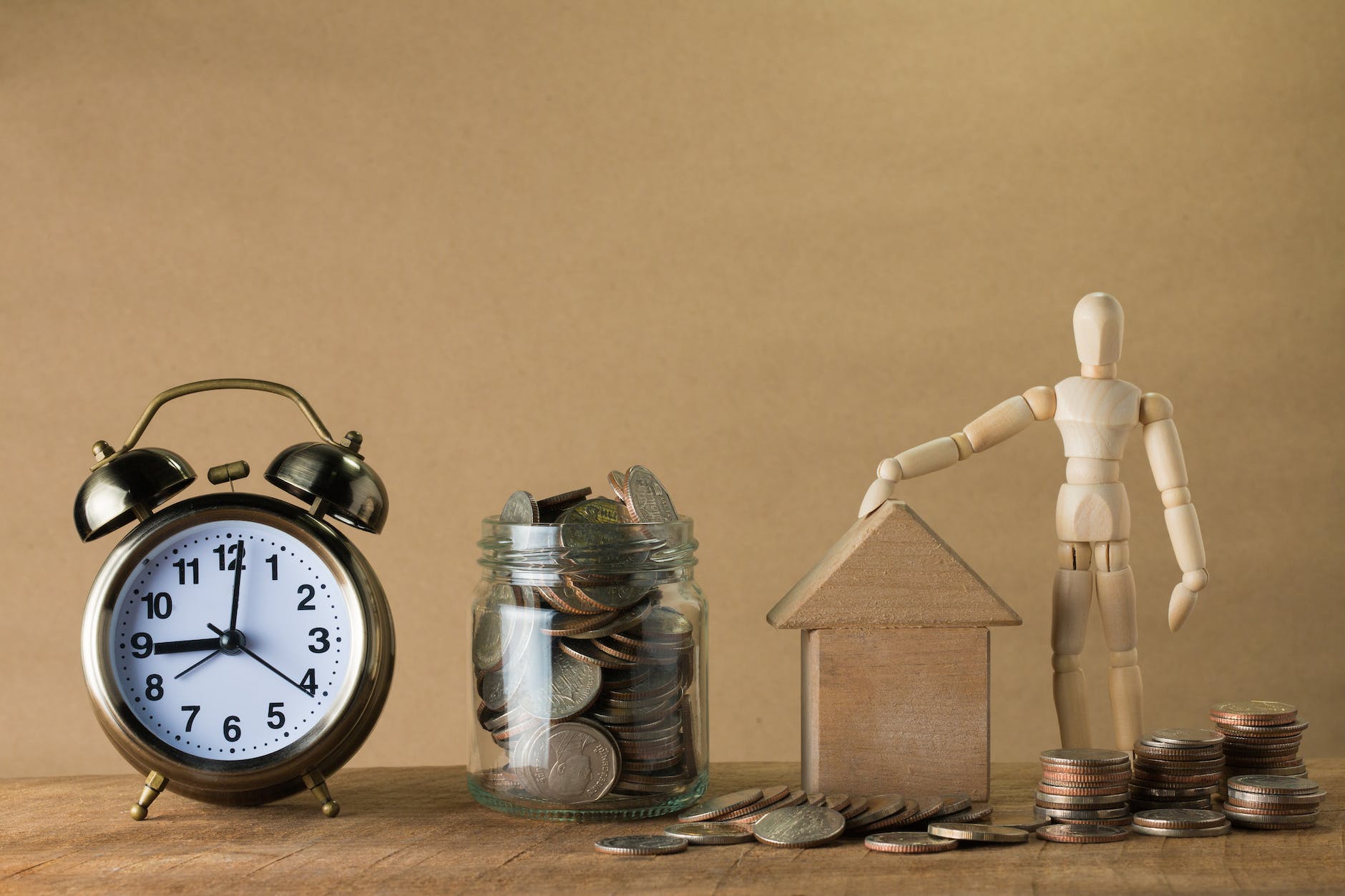
As we enter the holiday season and inflation looms large in the minds of many folks, I feel it’s important to reflect once again on the purpose of interior design. Interior design as an industry is deeply affected by the economy. When the economy slows, so does the demand for interior designers. That’s not likely a surprise, as many consider the act of hiring an interior designer to be a luxury – especially during a time when it’s already difficult to manage the expense of a project without a designer.

There are a lot of people who hire interior designers with an assumption that they will end up paying more than they would without the input of a designer. On one hand, that may be correct. If you are only looking at price, I guarantee you will find cheaper ways to finish a project on your own minus a designer. I also guarantee that, if you only look at price, you will likely end up paying more in the long run. That’s especially true when you factor in the psychological costs associated with sub-optimal decision making. (For reference, just Google “remodeling and divorce” to see what I mean). Even if you’re looking at slightly more than price, there are a multitude of companies willing to maximize style and minimize quality and durability in order to hit your desired price point. I’m not sure about you, but I have no greater regret than throwing money at something that doesn’t last. I also really dislike feeling stupid for having bought something that falls apart or looks terrible in no time at all.

This principle applies to both product and process of design. I am always surprised how many (very intelligent and good, mind you) people will waste both time and money with faulty project planning. Piecing a large project together without a general contractor sounds like a good idea because on its face that might seem less costly. When you choose not to hire a general contractor, you are choosing to be your own project manager. Being a project manager means understanding all of the construction details necessary in order to execute them in a specific order, by the correct personnel. A lot of folks mistakenly think that the people you hire to do one thing will make sure it fits alongside other work being done (or that needs to be done). That’s impossible when they are not hired for the entire project. They are not going to take on that responsibility for you, and I am confident they would not do it for free.

To use a recent analogy, how would it work if everyone shows up at your house with their own Thanksgiving dish and everyone needs to cook it at the same time in your one oven? What if everyone brings the same dish? What if one of your guests is (surprise) vegan? No no no, this is stuff you plan for if you want it to go well for you and your guests.

In sum, when you haven’t the prerequisite knowledge for putting the process together you will lose efficiency and increase your risk of being responsible financially for all of the delays, extra materials, time and other associated costs for your project. I should also mention the increased risk of losing your mind trying to assemble the pieces once things go awry. No one is going to be clamoring to help clean up these types of messes when they were entirely preventable.

Interior Designers are not general contractors, but for most projects they can be your designer and advocate in working with a general contractor; and in some cases manage your project for you in working with a variety of trades. Even if your project doesn’t require the work of tradespeople, an interior designer can help you optimize the value of your purchase. Interior designers are trained to evaluate the quality of goods and services, and can help you make the best selections for your budget. They can make sure things stay on track for your project while you still get to enjoy your life. They can help you prioritize your purchases in order to get the best value while achieving your desired aesthetic. Some things don’t need to last, some really should. A designer can help you evaluate the pros/cons within an existing design concept – one that you may not realize you already have. This too can increase the value of work being done by requiring less additional work to create a seamless transition to your new space.

Just some food for thought – Happy Holidays and I hope you can enjoy the bounty and blessings of the season.

Wabi Sabi

Photo by Alexander Grey on Pexels.com

All things in life, including you, are in an imperfect state of flux, so strive not for perfection, but for excellence instead…Appreciate the beauty of all things, especially the great beauty that hides beneath the surface of what seems to be broken. (Source: https://www.omaritani.com/blog/wabi-sabi-philosophy-teachings)

I was first introduced to wabi-sabi through interior design. Interestingly enough, it was the name of a fabric pattern I liked. Curious about the source of its name, I investigated further and discovered this wonderful philosophy. I wish I could dedicate an entire post to the philosophy but unfortunately I would likely do a disservice to it given my novice understanding, plus I have more pressing thoughts to which the concept of wabi sabi may thoughtfully apply at a very basic level.

As the first paragraph implies, the philosophy of wabi-sabi involves, at a most basic level, the acceptance of imperfection. Imperfection is the natural state of life and therefore we must learn to accept it and celebrate it as the natural way things are. Perfection, as we invent it, simply does not exist. My own take is that striving for excellence is noble, but seeking perfection is inherently crazy-making. You can imagine my delight in discovering there is a more complete, ancient wisdom to support that very specific belief.

This leads me to another, more pressing thought that reminded me of this ancient wisdom. Tomorrow, citizens of the United States will have their last opportunity to cast a vote in the midterm elections. I have battled feelings of dread I have been experiencing for weeks surrounding this election. It’s not a feeling of win-lose, but rather a deeper dread as we are struggling to preserve our democracy. Election denials, autocratic sentiment, gross denial of human dignity and rights–to name a few–are literally on the ballot as espoused by a set of candidates embraced by one major political party.

Even absent the outcome of these elections, our democracy feels broken by the very presence of such anti-democratic behavior on the scale that exists today. Is there something beautiful hidden underneath that which appears to be broken? I would say that democracy is a beautiful thing, despite its apparent imperfections. It is closer than anything else to a natural state of being in governance, where diverse people can co-exist and co-create for a better future. Naturally, it is messy.

Many have grown impatient with process and compromise, as required in democracy, to achieve excellence as one diverse nation. One party in particular has abandoned both in favor of one person’s idea of a ‘perfect union,’ conjured from a past that simply never existed. It could never be anything but crazy-making to think our best future is derived from a non-existent past, and we have ample evidence to prove that point. Today I dread we will lose our last best chance for a better future together because wabi-sabi in democracy is not something we understand. Instead, we are being sickened by an obsession with a false idea about ‘perfection’ that is simultaneously predicated on the absence of our ‘imperfect’ democracy.

So I look to the ancients to give me some wisdom at this decisive moment. No doubt life will go on and we will go forward. Can we find beauty? Can we find joy and happiness? Can we continue to strive for excellence? I will keep on this path as I have for years now, and today thankfully I can find true meaning and joy in that search. Best to all in your search, and please VOTE if you can.

Fantasy Sweet

Photo by Tu00fa Nguyu1ec5n on Pexels.com

Alright, I admit it. I am a complete sucker for epic fantasy/sci fi fiction. I am tickled that the two series, “House of the Dragon” and “Lord of the Rings: Rings of Power,” are both premiering as we close summer of 2022. All of my escapist tendencies are being matched by superb storytelling and breathtaking attention to visual detail.

To be sure, I have not lost sight of the fact that our upcoming midterm elections could spell the beginning of the end for our democracy. Given that fact and the extremely small influence I have over the future chain of events, I desperately need a story of victory over evil right now.

While the world also observes the passing of Queen Elizabeth II, it’s important to note how deeply English history influences two of the most popular programs on television right now. Regardless of the variety of feelings that exist concerning the monarchy and British imperialism, Queen Elizabeth II represents the latest segment of a through-line that reaches back centuries into a history that shaped much of our modern western culture (for better or worse). In a world that today feels like a wrecking ball off its chain, the continuity she brought was felt by a broad swath of people as (at least) something of a constant. Because of that, her loss is felt in ways that differ from ‘normal’ circumstances.

I won’t pretend to be an expert on English history, however I have had a general interest in the evolution of many tribes that made up both Celts and Britons. Druids shaped the spirituality of these tribes. There are many nods to these tribes and their spiritual beliefs in the scenery and design of both “Lord of the Rings” and “House of the Dragon.” You can pick up many themes in the set and costume design for these shows. It’s easy to see why these themes would be compelling given our challenges today. Here are just a few examples:

An abundance of nature. You will see scroll motifs, filigree, leaves, and trees in the detailed embroidery and etchings found throughout the sets. There is a spiritual connection between humans and the natural world. There is a belief that strength is derived from a connection to nature and a deep reverence for the natural world. Evil is derived from a rejection of these principles.

Presence of curves and circles vs. straight lines and squares. In keeping with the connection with the natural world, the presence of circles and curves more accurately represents what is found (and to be appreciated) from the natural world. Circles and spirals represent the eternal nature of life as a series of recurring cycles.

Femininity is associated with the divine, giving life and continuing the cycle. Curves are typically associated with the female sex, especially when accompanied by lush interiors and ample attention to the decorative arts. While the experience of women is complicated throughout history, their close association with the cyclical nature of our world gives them strength and gives men pause.

So yes, not hard to see why these themes in popular television are deeply relevant while still offering some form of escape. Trying to wrest autonomy and power from women as life-givers? Attempting to deny the natural world it’s dominion over our very existence? Celebrating excesses amidst horrific suffering? Wow, have we learned anything at all?

An ugly history can sure be made to look lovely, from a very safe distance.

Sensitivity Among the Insensitive

Photo by Anete Lusina on Pexels.com

Being highly sensitive is an invaluable trait that comes with many advantages. HSPs are known to be highly observant, intuitive, thoughtful, compassionate, empathetic, conscientious, loyal, and creative.

One of my greatest personal life challenges has been to accept and celebrate that I am a highly sensitive person. It has not always been easy for me. I have too many examples to count. As a child, for example, I cried A LOT. As a teen, I was easily overstimulated by situations and often felt misunderstood. As a young adult, I was wholly unprepared for a culture defined by high levels of internal competition coupled with insensitive and frequently callous behavior. At this point in my life, I protect myself by staying vigilant and avoiding them. I am instantly repelled by evidence of any mindset that either dismisses or stigmatizes people who can’t accept elements of toxic environments as being ‘too sensitive.’

For the record, Highly Sensitive People are not ‘too sensitive.’ If you’re unfamiliar with this concept, it’s worth reading about. HSPs simply have a wider, deeper range of emotion and perception such that when it’s nurtured, HSPs can posses a superior facility for responding to the challenges presented by the world around us (when given the opportunity to do so). It is most evident in the work of great artists and notable creatives throughout the centuries, where it was allowed to flourish among them. It is a gift that is not only misunderstood, it is frequently trampled by people who lack sensitivity. For people who are highly sensitive, operating in a toxic environment can only result in misery. In that situation, the only reasonable choices for an authentic and highly sensitive person (two traits that are basically inseparable) are to remain small and unnoticed while deeply unfulfilled, or try to speak up to try to change the culture and then open yourself up to be the object of hostility.

In hindsight, I now realize that both of my parents were also highly sensitive people, who shared many of the same challenges but did not happen to grow up with highly sensitive parents. While their sensitivity contributed heavily to the fact that my parents were honest, decent and loving people, they spent much of their life trying to combat the effects of being misunderstood as highly sensitive people. Because they lacked any support for being highly sensitive from a young age, my parents perceived sensitivity as something to be overcome throughout their own lifetime. It was a source of both attraction and conflict in their relationship. They demonstrated all of the wonderful qualities of highly sensitive people, but remained largely stifled as their gifts often went intentionally unnoticed and therefore undervalued in this world. Of course, becoming less sensitive was not a successful endeavor as their sensitivity was a product of their own biology. The resulting negative self-judgment affected their self-esteem, their ability to nurture the self-esteem and confidence of one another and their children as highly sensitive people, and ultimately their own happiness and satisfaction. My father died of lung cancer as a result of smoking, a habit fueled by a lifetime of mild depression. My mother shared with me, as she was preparing to die, the lingering pain inflicted by childhood memories of being belittled and mocked for (what I now understand to be) her sensitivity.

For obvious reasons, the life experiences of my highly sensitive parents presented a blessing and a challenge for me growing up. My parents were highly perceptive and quick to observe my difficulties growing up, likely because they related to them. We shared similar ways of seeing and responding to the world around us. I was free to be expressive and creative as a child and over the years I built an authentic friendship with my parents; something I cherish now more than ever. As their friend, I always wished more for them than they seemed to get from life. Until I learned about Highly Sensitive People, I manifested many of the same internal struggles that plagued my parents. I both loved my parents for who they were and blamed my parents for these struggles. Once I better understood what it meant to be highly sensitive, I could find a deeper appreciation for them, and myself, without the blame.

And now these days, with clarity from my own experience, I find common ground with so many people during this ‘great resignation.’ Perhaps the hallmarks of today’s capitalism–brutal competition and what seems like an utter lack of humanity–just don’t ‘trickle down’ well into workplaces, especially when people learn they can leave those workplaces. Perhaps people were more accepting of toxic workplaces before the pandemic than they are today because life has become that much more precious to them. Or perhaps they spent enough time outside of the suffocating confines of many workplaces that they simply can’t go back. As an HSP I can say “I see you, and I feel your pain.” Will this be a tipping point toward a better future? Will HSPs finally see our gifts put to use in these spaces? You’ll probably have to outsource to find us though. My gosh, would we be happy to help if you’re serious about making things better for people – it’s our most enduring affliction!

Please Take This Personally

Our uniqueness influences our design preferences and priorities. Embracing this diversity as a designer and learning to translate the complexity of our existence into a workable design strategy helps yield better results for our clients.

In my thinking, there are a couple of different ways to approach design work. One method is to establish your aesthetic as a designer (similar to a brand) and then attempt to draw clients and/or customers to your aesthetic (ala Joanna Gaines). There are a lot of design firms that give you a pretty good idea up front what you will get from them in terms of your design. If you like it, you’re more likely to contact them of course. But what if the client loved a featured design but you as the prospective client don’t love it? Does that mean the designer does a poor job or can’t meet your needs? Possibly – I won’t lie about that. But there are many instances where that would be a gross misperception.

As an alternative to the scenario above, designers can attempt to draw clients in by introducing them to the design process that will help clients articulate their own aesthetic and achieve their own goals. That is a much tougher sell when prospective clients are largely unaware of the design process. After all, if someone really understood their own aesthetic and design process they are much more likely to think they can come up with their own designs successfully. We’re emotional beings and our biases constantly override our better judgment, no matter how logically we approach a process that is deeply personal in nature. It can be difficult to get out of our own way in taking calculated risks with our own designs and executing an efficient process of realizing a design. The resulting frustrations can sour many on the process entirely. A commitment to a dynamic process of design can overcome some of the barriers associated with being locked in before you even start the design process.

Because it is deeply personal in nature, a dynamic process of design between designer and client involves a lot of trust. It’s easier to build trust with someone you know or you think shares a similar design aesthetic. For many designers, that’s how they pursue jobs at particular firms and also how they get their first clients. With that, there remains a risk the design process is reduced to a self-perpetuating cycle of creating designs that merely conform to conditions established by a shared aesthetic between designer and client. Both designer and client are likely to be biased in a similar manner. That’s not altogether terrible, but unless you’re working with Frank Lloyd Wright the result is unlikely to be either transformative or transcendent from what came before it. And as it was with Frank Lloyd Wright (who was famously inflexible with his own designs), your designer may take offense if you are not prepared to accept whatever you are given!

In thinking about all of this, I try to be thoughtful in how I present myself as a designer – including how I reach out to prospective clients and how much of my design work gets shared online. I am very proud of what I have done but I don’t want to lock myself in, nor do I want prospective clients to lock into a set of images to determine what I can do for them. I got into this line of work interested in how identity is (or can be) reflected in design. Not my identity, and not the identity of people just like me. I am interested in our diversity, in our extraordinary individual and collective history on this planet, and the intersection of our daily realities within our built environments. As an artist I want to draw from my intuition and perceptions that are shaped by purposeful engagement and not necessarily from what I see in front of me.

Blame it on the Rain

Photo by Fabiano Rodrigues on Pexels.com

There’s nothing like a rainy day to bring contemplation. Though not always, there are certain times I just love a rainy day. Perhaps especially following a busy time, the gentle pitter-pat on the roof with a bit of extra time to slurp coffee brings a sigh of relief. Add a sleepy puppy and an old housecat feeling generous enough to share my lap with one another…it’s absolutely priceless. If only I had a carafe handy to refill my cup, it would be perfection.

It’s a wonderful thing when contemplation does not bring unpleasant thoughts. The sound of summer rain invites a much more meditative, accepting way of thinking about the world. The rhythmic sound of drops falling welcomes you to think of the world as having it’s own rhythm. And just like any great musical masterpiece, the presence of syncopation can be briefly unsettling while adding lustrous intensity to the whole. In hindsight, you wouldn’t have it any other way. The snoring pooch is the added refrain, that everything goes onward and keeps breathing at its own pace.

Breathe, breathe, breathe…take the time to breathe at your own pace. Be still and free of the things that press upon you, if only for a moment. Remember the world will go on with or without you and it is okay to retreat when necessary. Refresh yourself for the moment when the world will gently ask you to listen. Then you will best decide what is needed in that moment.

Or, the delivery truck will show up and the dogs will start barking and you will strain to capture that spectacular moment of Zen you were just sharing…

It’s all one composition.

Enough Already

Photo by cottonbro on Pexels.com

When are elected officials going to decide we have had enough of gun violence in our country? Another deadly massacre at an elementary school and here come the thoughts and prayers. I cannot speak for the feelings of families upon receiving thoughts and prayers from officials for their dead child. As someone indirectly affected by gun violence on a regular basis, I find such gestures from those in a position to actually prevent these heinous crimes completely meaningless without further action.

But we’ve played out this argument a million times before, and probably will again after, this latest slaughter. There are sensible arguments for allowing people to own guns, and there are sensible arguments for curbing abuse by individuals who legitimately threaten the safety of the community. Sensibility is not driving our politics as demonstrated on this and several other fronts, and it’s killing us.

In too many cases the same people who would forsake a woman’s life for an embryo will quickly turn a blind eye to the actual leading cause of death among children in the United States, which is gun violence. If there was a principle to be derived from these blaring inconsistencies, I might have more patience.

My page domain is ’cause to celebrate.life.’ All lives are precious. Even the lives of those who might make what we consider to be a terrible mistake. I wouldn’t support denying medical treatment to people who refuse to get vaccinated and later contract COVID-19. I don’t support the death penalty. I don’t believe women should die from illegal, and therefore unsafe, abortions either. I don’t believe LGBTQ+ people should be driven to suicide as a result of ignorance and/or prejudice. I do not support reliance on lethal force to address criminal behavior. I don’t believe anyone should be dying from lack of access to adequate nutrition and/or healthcare. And I firmly believe that children especially should not be dying in the crosshairs of tedious posturing among politicians who continue to successfully isolate themselves from the consequences of their own decisions with regard to these and many other issues.

We aren’t designed to promote human suffering. We’re designed with amazing capabilities that make it possible to enjoy this incredible world. It’s not a joyful place where you’re expected to be armed in order to stay safe. There is no reason to believe or accept that violence is the inevitable way of life for anyone. Reliance on guns just proves how much we abdicate responsibility for making our world a place where everyone can thrive without succumbing to violence. I pray those in a position to do so will act purposefully in helping us all realize our full human potential.