Celebrating a Life that Ends in Death

doughty.png
Caitlin Doughty founded the Order of the Good Death—a collective of funeral-industry professionals, artists, and academics who are dedicated to “exploring ways to prepare a death-phobic culture for their inevitable mortality.”

It’s hardly the topic one might expect to encounter in an interior designer’s blog, but since I finished the book “From Here to Eternity” by Caitlin Doughty I’ve been thinking about it a lot. It’s also because death has surrounded me quite closely this past year, approaching one year since my mother’s passing and 6 months since the tragic loss of a brother-in-law whose birthday is this month.

It was quite by accident and incredibly serendipitous that Caitlin Doughty’s books would literally land in front of me at this time in my life. I’m not willing to go so far as to say there are no accidents, but I do wonder if we aren’t constantly presented with new and perfect opportunities to make meaning out of our lives…while they last and perhaps one step beyond.

My mother’s passing and the events that followed (which included my planning her burial service and Celebration of Life) literally gave life to my new career path as an independent designer and event planner. Before I read Caitlin’s books, I thought that too morbid a subject to share with people. That made me sad to think no one else would hear this part of my story. The story is about using my gifts to honor my mother and finding the love we shared, that I poured into her service, returned to me an incredible gift to pursue my dreams on a new level. Why should I feel uncomfortable sharing that with anyone? Caitlin’s books explore this topic and in an incredibly smart, funny, graphic and yet surprisingly reverent fashion.

Instead of talking about death, too many people pour unspeakable amounts of money into the death industry; out of fear and anxiety that comes from not being prepared for death. Perhaps too, dreading any reflection on our own mortality is a significant factor in the lack of preparation, as Doughty suggests. We don’t know when our time is coming but we do have ample notice of death in our future. Wouldn’t it be nice if, instead of fielding a last-minute sales pitch in preparation for your body’s final disposition, your loved ones took care of you in the way YOU think you deserve and also eases their pain and suffering? How can we make that happen?

I’ve written a lot of posts from my perspective as an interior designer. As an event planner, I encourage talking about death even though we find it uncomfortable to talk about. Because I had the heartfelt talk with my mother, I was sad to lose her but I was glad to plan her service. I knew what to do for her and knew it would bring her joy. It was a gift in ways I could not have imagined when we had the talk. Death is not the enemy of life, it’s the inevitable conclusion of one life, hopefully remembered as one well-lived and full of blessings for new life. If planning your (or a loved one’s) remembrance event is something you would like to explore and especially if you are thinking ‘outside the box,’ I assure you it will not be a taboo subject for me.

Priorities on Display

Artwork by Rick Ross at the Goodman Community Center

One of my new joys is volunteering as Curator for the Ballweg Gallery at the Goodman Community Center. This lovely venue provides a wonderful opportunity for breaking and seasoned artists alike to share their work in a welcoming and supportive space.

The way I’ve chosen to build my business helps me appreciate what life is like for independent artists. Interior designers are considered artists of course, but the economics of doing the work is much different for most designers who can be employed to do their work or who can generate their income selling other people’s products as part of their design work. Interior designers have been the more fortunate among artists for this reason.

There are changes afoot for interior designers that other artists have been confronting for years. The proliferation of HGTV and online resources has made interior design seem more like a commodity than something for which one should pay a professional. It’s a big problem – if purchasing a haute design is perceived to be as easy as buying a television, interior designers seem irrelevant and unnecessary. Of course that’s wrong – nonetheless this gross misconception combined with the disappearance of traditional retail has threatened the economic position of interior designers everywhere.

To counter this problem, there is movement afoot to rebrand the interior design profession in ways that will make it more exclusive and inaccessible. Of course, the economic interest of interior designers is to be better understood as architects rather than salespeople when it comes to compensation. There are other good reasons too – but lets be real here. By limiting the supply of designers along these lines, the obvious outcome is that more demand for fewer designers preserves economic opportunity for those fewer designers. That is, opportunity for those already economically privileged enough to pursue the additional credentials required for consideration. If interior designers are truly artists, that way of thinking does not ensure opportunities for the most talented among us.

Every art form requires extensive preparation as well as technical knowledge and ability (when was the last time you improvised a blues saxophone solo within a minor pentatonic chord progression?) but there remain multiple ways to become an artist. Musicians don’t stop being called musicians if they fail to attend Julliard and no one is trying to make the case for that to happen. Closing off pathways to the profession is the survival strategy for interior designers who want to keep a steady paycheck for what they do – and of course they deserve one. They are not the only ones.

Interior designers are increasingly having to face the same difficult choices that other artists have always had to face. It’s unfortunate that ANY artist has to sacrifice the security of knowing how to pay the bills in order to fulfill their purpose on this planet. However I don’t think the solution is EVER to make it impossible for someone to pursue their purpose for lack of privilege to pursue it. My little home is filled with original artwork and I chose an unpaid opportunity to support other artists. It’s a small step in advancing my belief that our collective work in the arts has value and improves our world. Therefore we as interior designers should not abandon our message as artists in order to convince others of that fact.

Time for Presence

In gratitude for the many gifts this season brings to the table….

It has been a pleasure to start the holiday season as a newly independent designer, business owner and longtime volunteer. I am grateful to all of those who continue to support my work and my path of discovery in life.

As we all celebrate the season in a multitude of meaningful ways, it’s important to remember and (very importantly) value our contentment and balance. For our own health and in supporting the health of our loved ones, it’s important to remember. Even the most well-intended holiday bustle can obscure the season’s message of peace and joy. I hope to keep all that is precious to me just a bit closer to my heart this season; by slowing down just a bit where I can.

I am especially grateful for the love of my life who has brought this incredible opportunity, contentment and balance to my existence. May you and yours celebrate the season with a similar abundance of peace and love.

A Beautiful World of Color

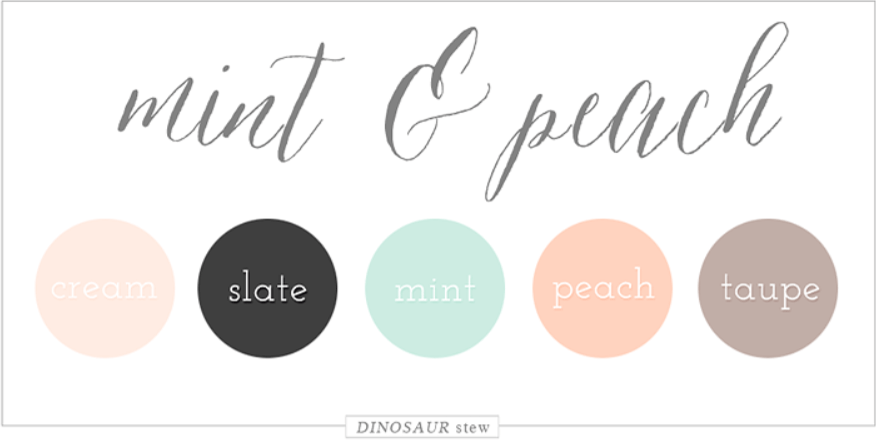
image from dinosaurstew.com

For all of us fortunate to see color, we know that the amazing spectrum of color we see in the world is truly a gift. We experience combinations of colors in different ways, influenced by such factors as culture and personal experiences. Through invention, technical innovation and creative expression, color can now be fully utilized both indoors and out. We can be intentional in creating spaces that evoke a whole landscape of emotion and interaction with one another.

How wonderful it is that we continue to find new ways to design with color and then watch how design evolves in so many exciting ways. Perhaps there are some parallels we can draw; that having the freedom to innovate and evolve is broadly essential to maintain our beautiful, colorful world. We may not have the same reaction to what we see at any given moment based on such factors as culture and personal experience. Nonetheless our freedom to innovate and create is to be cherished as the one thing that can yield something colorful and beautiful; for all of us fortunate enough to see it.

Mergers and Acquisitions

Gallery wall in a stairwell provides space to share a history while building a future together

Within the last couple of months, I have had a similar conversation on multiple occasions. When I mention I am an interior designer, the listener describes the process of merging households. It goes something like “Wow, we could use a designer to help us….” What follows is a description of merging two different design styles, or two very established lives that are now sharing one household.

This type of situation is a terrific opportunity to work with a designer. Negotiating a shared space can be challenging at any age, but it gets more difficult with age. We all tend to grow more fondness for our own habits and preferences over time – our objects and their relationship to our space become integrated with our identity.

It’s unlikely (if not impossible) we are going to find someone just like ourselves with whom we would like to cohabit a space. So it’s important to appreciate when folks are negotiating their shared space, that no matter how much the discussion may be about objects – the real subject is individual identity.

An interior designer can be a source of insight and compassion for individuals experiencing the challenge of merging households. Possessing a background in human development and counseling as well as interior design, I know it’s not enough just to weigh aesthetics. Creating a shared story is not a process of eliminating the unsightly. Rather, the focus should be on curating elements that best tell a story of each person. From there – knowing the story did not end there – arrange elements to make room for more telling of a life together.

Interior Design as Self-Care?

Photo by Breakingpic on Pexels.com

The New York Times is now dedicating a webpage and newsletter to ‘Smarter Living;’ offering stories, tips and advice that are all geared toward living a better, more fulfilling life. One article stood out to me as offering a great introduction to their definition of self-care in this context. I’m looking forward to seeing more and you might as well. See https://www.nytimes.com/2019/11/03/smarter-living/self-care-routines-that-actually-help.html?

I strongly identify my life-work with the message of this article. The themes align with those of my own research and writing interests as of late. I hope to move the understanding of my work as a designer away from the realm of pure self-indulgence toward a deeper understanding of the purpose of design.

Designers can develop specific solutions for you and those can be very valuable solutions. I think we have to be careful however that we do not claim that pursuing design in itself leads to a better life. In some cases, it doesn’t. I think design is better understood as the metaphor for, or the reflection of, your life. A design solution can improve your life when it’s properly identified, timely and achievable in addressing the problem. Done well, it will amplify all of the good in your life that you bring to the process. If design is being pursued as a ‘solution’ to a deeper problem, it will only amplify that problem. Good intentions will be easily overshadowed by the starkness of an ill-fitting design solution.

Here’s a couple of examples: a new design is a great solution for the happy couple that decides together they want to invest in spending more quality time at home. It is not the best solution if one partner thinks the new design is going to improve or help one cope with a difficult relationship. Attempting to force a change and reallocating resources to that change may cause even more friction in the relationship. Similarly, investing heavily in a flashy new office design to perk up employees who are feeling under-valued and under-compensated is not likely to improve their morale and productivity; it may in fact build more resentment. It could also attract new employees, the addition of whom could only deepen the problems affecting current workers.

I don’t want to be the designer that doesn’t care about whether your life (or someone else’s life) is going to be better as a result of what we do together. It would not be appropriate for me to propose solutions for you beyond what I can offer, but I can step back and help you consider whether what I can offer is going to achieve your intended result. Having the judgment-free space I can provide to discuss your design objectives will yield an outcome that can indeed improve your life. Together we can create a design that will reflect the deepest care for you and the life you share.

Snow Let Go

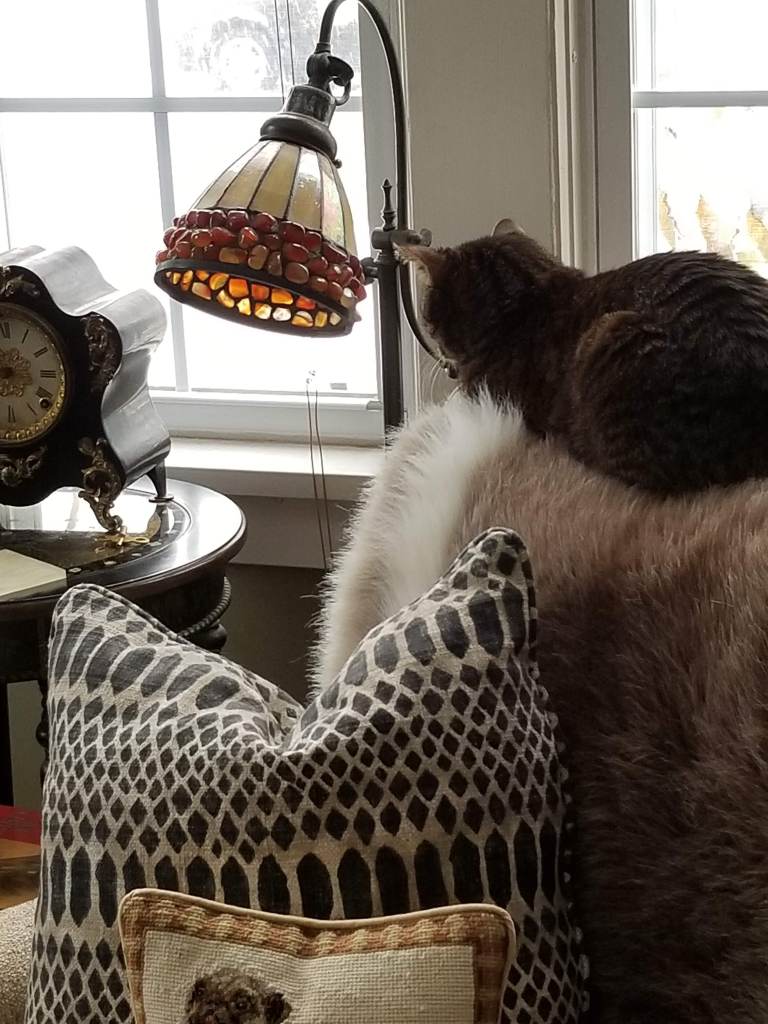
Sir Oscar enjoys the show – you can barely see the parked car through the snowfall!

Ah, it appears we are off to the races for a long snowy winter ahead. We’re often too busy curling up under blankets with a good book to worry about the evolution of our interior spaces during the winter months. I am contemplating some additional time writing this winter myself, but I may squeeze in a couple of painting projects as well if I can crack some windows.

Continually evolving as a creative person and entrepreneur, I am excited to see where all of this is going for me. The opportunity to reflect is also welcome this winter. I see parallels between my own life and that of my design work. My approach is the same -it’s important to create the framework for new ideas to emerge. It’s also important that framework allow you the energy to pursue those new ideas with gusto when they do emerge. I just finished a terrific book entitled “The Artist’s Way” by Julia Cameron. The whole book is geared toward helping creatives heal from a world that tells them they are not allowed to behave in ways that actually facilitate creativity. It also outlines the process of rebuilding and claiming your creative life for yourself.

There’s a big difference between a creative occupation and a life of being creative. When the boundaries of 9-5 or whatever is assigned to your creative pursuits dissolve away and true creativity flows into your whole person-hood, something amazing happens. It fundamentally shifts everything; including and especially how you think about your occupation. Once you cross over into that life-space, you can’t think about your life or the occupation of your time the same way.

I think that fear is a fundamental reason why so many people resist the true creative impulse throughout their life – the implications can be scary and it can be messy. I can say with confidence that being truly creative doesn’t have to be either of those things. If you have courage and resolve to build something different – something that allows creativity to keep flowing through you – it’s joyful. Indeed it’s the building that is the hardest part, because you will never stop this building process if it’s working. It can and will take you places you never anticipated.

Is this starting to sound like a design project? It does to me – we feel the same trepidation toward any actions that change our environment or the way we relate to people. When we change our spaces or create meaningful experiences that shift our thinking; we can change the trajectory of our lives. It can be frightening and it can also be illuminating. What we do with what we see in a new light is our choice. Resisting the impulse to change out of fear is the only way we can really fail.

Eventually…

It may be subject to some curiosity…what does an interior designer know about event planning? Answer, not much – unless it’s something that put her on the path to eventually becoming an interior designer. My first career in higher education began working in the student union coordinating a variety of activities, special events and concerts. Even before that, I started out playing music and banging gear for an all-female rock band while trying (unsuccessfully) to master an audio mixing board. Finding creative ways to bring people together has always been my go-to methodology to overcome my tendency toward introversion. Stated simply, if I find ways to get everyone connecting and talking with each other, I don’t have to talk so much myself!

It’s my natural instinct to observe more so than to engage socially. Don’t get me wrong – I love people. I just find the hostess role exhausting. That explains my early career observing and bringing people together behind the scenes. Years and years into it, I find this to be my greatest gift in creating a variety of environments that inspire others. It’s a seemingly ambidextrous approach. On the one hand, I can help create a cozy retreat for someone who wants respite from the daily grind. On the other, I can create environments that make it easier to start a conversation or linger at a gathering just a bit longer. By far, I’m the most challenging person I know when it comes to accomplishing either one of these objectives.

With years of experience with event planning and management as a foundation, I am thrilled to put all my attributes together to serve others. I’m particularly interested in working with non-profits, helping with fundraisers and/or facilitating meaningful connections among people with shared interests. If this applies to you and/or something you’re considering for the future – get in touch. You can’t start planning too early!

Human Economy

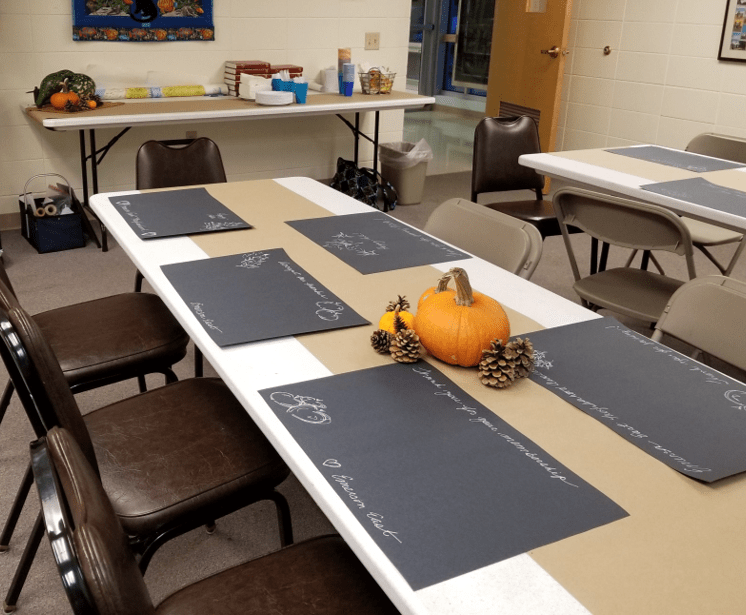
Emerson East Neighborhood Association gets some budget-friendly seasonal panache

Economies get labeled according to the work people predominately do in them. In the human economy, the most valuable workers will be hired hearts. The know-how and analytic skills that made them indispensable in the knowledge economy no longer give them an advantage over increasingly intelligent machines. But they will still bring to their work essential traits that can’t be and won’t be programmed into software, like creativity, passion, character, and collaborative spirit—their humanity, in other words. https://hbr.org/2014/11/from-the-knowledge-economy-to-the-human-economy

In past years I would have advocated for interior design to be understood as knowledge work. The case is still being made strongly throughout the profession that indeed it is. Interior designers have had to struggle against the harmful misconception that their work is not intellectually demanding or knowledge work. Ironically, just when that argument is being won that we are knowledge workers, we are finding it is our soft skills that will ultimately propel the profession into its future.

Think about this…if you find something you like on Pinterest and do a Google search on that idea or item, all of those cookies you drop are going to generate articles and advertisement about that thing you like. It’s almost irritating how much you will get back. It’s like no one has an original idea! With efficient machines ready to provide you ample data about your project idea within minutes, why then would you consult a designer? Your computer has already found thousands of related images and technical specifications of what you desire that you can take to your local retailer, architect or contractor. So why not just do that and save yourself the expense of working with a designer or just use their ‘free’ design services?

The simple answer is this: as design thinkers, interior designers are there to immerse themselves in YOUR experience while applying knowledge and technical expertise to the best outcome for YOU. This can only happen effectively when your project objectives are properly aligned within the context of your life. Your life cannot be simmered down into a few data points. Any software that spits out a design solution for you is most certainly not using enough data in order to do so. You might get what you think you want based on the inputs you provide in your search; but it might not also be what you need or even what you really want after all.

This type of work is best suited for the interior designers who understand it is their role to work with you this way. Humans are emotional beings and our personal choices are typically the result of an emotional process. Clients often come to us with a solution created in that context; vulnerable to all of the fun, faults and foibles of subjective reasoning when it comes to our own lives. Because you show up with images and specs, others will most certainly oblige your solution for you, no questions or few questions asked in order to close a sale. The role of the independent designer is to really, really ask – to better understand the problem underlying your solution before giving you an estimate or ringing up a sale for something that doesn’t meet your needs.

A good interior designer will be passionate about design; a great interior designer will also be passionate about getting to know you and the best design for you. This takes time, energy and trust in someone’s ability to help you tell your story while also applying years of knowledge and technical skill to a design. That kind of connection can only be developed on a human scale. It can only take place in the context of immersion in our wonderfully diverse, typically complicated and often quirky human existence.

Design Aspiration

Aspirational brand strategy may appeal to a person’s psychological, social and/or economic aspirations, rather than their psychological, social and/or economic realities. Aspirational brand strategy positions a product or service through image, appealing to what they want to be. https://www.tnp.no/norway/global/3059-whats-with-all-the-hype-a-look-at-aspirational-marketing

Interior design is just loaded with aspirational brand strategy. It’s not necessarily a bad thing. After all, at its core design is aspirational in nature, as I’ve been attempting to describe all along. We design our spaces and experiences to elicit satisfaction with, ultimately, ourselves. Whatever we feel is missing in our life becomes the focus of our design aspiration. Creating something of beauty can mean a lot of different things to both creator and observer. It can simultaneously motivate us to create and make us vulnerable to other people’s ideas about our creation.

I mentioned my office redo last week and excitement about my Herman Miller chair. Herman Miller is both an aspirational brand (prized for the status it conveys) as well as being a darn good product. My concern is with the latter but people do care about what their design says about them generally, including their status. I do feel good saying I could purchase a real Herman Miller chair and not a knockoff of the design. I know my money went toward supporting designers at these companies willing to invest in good quality design – an absolute necessity for all manner of design to remain relevant and aspirational.

Prior to today’s proliferation of the internet, it would be more difficult for a brand to be aspirational without also delivering on quality. There were few means to convince people they needed to purchase something for any reason other than the quality of its design and construction. The higher cost of quality products made them more exclusive to people who could afford them; thus making them aspirational to most people.

Today, it’s much easier to make money tapping into all manner of aspiration. In a way, this expansion of what consitutes aspiration is liberating individual expression and association. In many ways that makes interior design relevant to more people (think HGTV, tiny homes, vintage chic etc). It also opens up a door for companies to gain customers with clever branding while also compromising on quality for higher profits. It makes sense we should therefore see an explosion in online consumer reviews and competition for primacy among companies on the internet. We haven’t quite figured out that efforts to achieve primacy online still seem to employ more game theory involving consumers than anything else that is good for consumers.

And this is why you probably won’t see me on Facebook. I just don’t think I can do it. I don’t judge people who do use it, but if I wasn’t willing to do it personally I don’t feel as if I can do it for my business without compromising the honor of my intentions online. Several have said I’m nuts. We’ll see… I do want people to get to know me. Is there another way? Coffee perhaps?